Cybersecurity Careers in Nigeria and Africa: Skills You Need to Prepare for the Future
Cybersecurity Careers in Nigeria and Africa: Skills You Need to Prepare for the Future
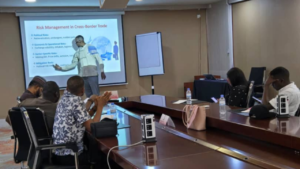
Digital transformation is changing how organizations operate across Nigeria and Africa.
Banks are becoming increasingly digital. Businesses are moving services online. Governments are digitizing public services. Companies are adopting cloud platforms, artificial intelligence, digital payments and remote collaboration tools.
Every digital transformation creates an important question:
Who will protect these systems, networks, identities and information?
That question is helping drive demand for cybersecurity knowledge and expertise.
Cybersecurity is no longer a niche technology field reserved for highly technical professionals. It is becoming a broad career ecosystem involving technical specialists, risk professionals, analysts, managers and business leaders.
For people considering a career in technology, cybersecurity represents one of the areas worth exploring in 2026 and beyond.
Start With Cybersecurity Awareness Join us for a one-day professional seminar
What Does a Cybersecurity Professional Do?
Cybersecurity professionals help organizations identify, prevent, detect and respond to digital security threats.
Depending on the role, their responsibilities may include:
- Monitoring networks
- Investigating security alerts
- Protecting systems and applications
- Conducting vulnerability assessments
- Responding to cyber incidents
- Managing security policies
- Protecting cloud environments
- Analysing digital evidence
- Managing cyber risk
- Educating employees about security
This means there is no single cybersecurity career.
There are multiple pathways.
Start With Cybersecurity Awareness Join us for a one-day professional seminar
8 Cybersecurity Career Paths to Explore
1. Cybersecurity Analyst
Cybersecurity analysts monitor systems and security events to identify potential threats.
They may investigate suspicious activity, analyze alerts and support incident response.
2. Security Operations Centre Analyst
SOC analysts work within security operations environments, monitoring organizational systems for potential security incidents.
This can be a strong pathway for professionals who enjoy investigation, analysis and problem-solving.
3. Ethical Hacker
Ethical hackers test systems for vulnerabilities before malicious attackers can exploit them.
Their work may involve penetration testing, vulnerability assessment and security testing.
4. Incident Response Specialist
Incident responders help organizations investigate and contain cybersecurity incidents.
They may work under significant pressure when organizations are dealing with active security events.
5. Cloud Security Professional
As organizations migrate workloads and data to cloud environments, cloud security has become increasingly important.
Professionals in this area focus on securing cloud infrastructure, identities, applications and data.
6. Cyber Risk Professional
Cybersecurity is also a business risk issue.
Cyber risk professionals help organizations understand potential threats and establish strategies for managing security-related risks.
7. Digital Forensics Specialist
Digital forensics involves examining digital evidence following suspected cyber incidents or other forms of digital activity.
It combines technical investigation with analytical thinking.
8. Cybersecurity Manager
Experienced cybersecurity professionals can progress into leadership roles involving strategy, governance, risk management, security programmes and organisational resilience.
Start With Cybersecurity Awareness Join us for a one-day professional seminar
What Skills Do You Need for a Cybersecurity Career?
Technical knowledge is important, but cybersecurity careers require more than technical ability.
Technical Skills
Depending on the career path, useful technical skills include:
- Networking
- Operating systems
- Linux
- Cloud computing
- Programming and scripting
- Threat detection
- Vulnerability assessment
- Security tools
- Identity and access management
- Incident response
Analytical Skills
Cybersecurity professionals need to analyse unusual activity, investigate problems and identify patterns.
Strong analytical thinking can therefore be highly valuable.
Communication Skills
Security professionals must communicate technical risks to people who may not have technical backgrounds.
A cybersecurity analyst who cannot explain the business impact of a security issue may struggle to influence decision-making.
Problem-Solving
Cybersecurity rarely provides perfectly predictable situations.
Professionals often need to investigate incomplete information and determine the most appropriate response.
Continuous Learning
Cyber threats change.
Technology changes.
Security tools change.
Attack techniques change.
Consequently, cybersecurity professionals need to remain committed to continuous learning.
Is Cybersecurity a Good Career in Nigeria?
For people interested in technology, cybersecurity can offer several potential career directions.
However, entering the field requires realistic expectations.
A certificate alone does not automatically create expertise.
Employers typically value a combination of:
Knowledge + practical skills + experience + continuous development.
Someone starting from a foundational level may need to develop knowledge progressively.
A practical pathway could look like:
Digital literacy → IT fundamentals → Networking → Cybersecurity foundations → Practical security skills → Specialization → Professional experience
The exact pathway will depend on the individual's background and career goals.
Cybersecurity and the Future of Work in Africa
Africa's digital transformation creates both opportunities and challenges.
As more organizations rely on digital infrastructure, cybersecurity becomes increasingly connected to business continuity, financial services, healthcare, education, government and telecommunications.
This creates opportunities not only for cybersecurity specialists but also for professionals who understand the intersection between cybersecurity and business.
For example:
- Finance professionals can specialize in cyber risk.
- Managers can develop cybersecurity governance knowledge.
- IT professionals can move into security.
- Data professionals can develop security expertise.
- Business leaders can improve organizational cyber resilience.
Cybersecurity is therefore becoming relevant across professional disciplines.
How to Start Building Cybersecurity Skills
If you are considering cybersecurity as a career, begin with the fundamentals.
Step 1: Understand How Technology Works
Learn basic concepts around computers, networks, operating systems and the internet.
Step 2: Learn Cybersecurity Fundamentals
Understand threats, vulnerabilities, authentication, access control, malware, phishing and basic security principles.
Step 3: Develop Practical Skills
Move beyond theory.
Use labs, simulations and practical exercises where possible.
Step 4: Choose a Specialization
Explore areas such as:
- Ethical hacking
- Network security
- Cloud security
- Digital forensics
- Security operations
- Cyber risk
- Governance and compliance
Step 5: Keep Learning
Cybersecurity is a field where professional development never really stops.
Final Thoughts
The future of cybersecurity in Nigeria and Africa will depend not only on technology but also on people who understand how to secure and manage that technology.
If you are considering cybersecurity as a career, the most important first step is not necessarily choosing a job title.
It is developing a strong foundation.
The threats are evolving. Your skills should evolve with them.
Start With Cybersecurity Awareness Join us for a one-day professional seminar
Start With Cybersecurity Awareness
Docenti Global Business School's Cybersecurity: Protect Today, Prepare for Tomorrow – Professional Seminar 2026 provides an opportunity to gain practical awareness of emerging cyber threats and understand the skills required to navigate today's digital environment securely.
Date: Saturday, 22 August 2026 Time: 12:00 PM – 1:00 PM Format: Online
Join the professional seminar and begin preparing for the cybersecurity challenges of tomorrow.
- Get link
- X
- Other Apps


Comments
Post a Comment